
South Euclid Previous Residents by Era
South Euclid past occupants are best traced by the era of the address record. A deed can show a recorded transfer, while tax records and maps add property context. Directories and the released census add a household snapshot for their own dates. No one source supplies a complete, uninterrupted account. Begin with the source closest to the period in question, then link it to the parcel number and legal description before moving farther back.
| Source | Years it covers | Where held | What it shows |
|---|---|---|---|
| Recorder deeds and ownership documents | c. 1810 to present | Recorder online search and counter | Parties, document dates and numbers, grants, and legal description |
| County tax records | 1819 to 1986 | Cuyahoga County Archives | Taxable owner and value trail |
| Parcel-linked tax history | 1987 to present | MyPlace and Fiscal Office | Current and available earlier tax history |
| Original map volumes | 1860 to 1945 | County Archives | Lot, building, and plat geography |
| Appraisal cards | c. 1935 to 1970 | County Archives | Building and value-description evidence |
| South Euclid directory sequence | 1949 to 1963 | Cleveland Public Library microfilm | Adult listing, address, and possible occupation context |
| East Suburban Directory | 1964 to 1980 | Cleveland Public Library | Successor suburb directory run |
| Haines criss-cross volumes | 1960 to “last year,” plus 1923 and 1926 | Cleveland Public Library | Address-to-adult name and phone layer, by volume |
| Federal census | 1950 currently released | Federal genealogy channels and libraries | Household snapshot on the census date |
City permits are another possible property clue through the South Euclid Building channel, but no retrospective start year for them was located. Use a permit as evidence of documented work, not an answer to who lived in a house.
Anchor a South Euclid House to Its PPN
Begin the backward trail in Cuyahoga County MyPlace. Set City to South Euclid and search by Address, Parcel, or Owner. Save the permanent parcel number, situs, owner field, transfer tab, and legal-document path. The PPN format is 000-00-000, a map book, page, and circle number. It is the stable reference to carry when the wording of a street address has changed.
Keep the physical situs separate from the tax mailing address. The latter tells the Fiscal Office where a bill is delivered and can differ from the property’s location. Neither field establishes all people who occupied the address. The parcel is a research anchor, not a roster.
Trace South Euclid Past Owners Through Deeds
A change in ownership is not automatically a change in residence, but recorded documents supply the strongest documentary backbone for a house history. Use the Cuyahoga County Official Records Search Advanced Search after identifying the parcel. It can search party names, grantor, grantee, recorded and instrument date ranges, document types, document numbers, parcel ID, volume/page, property address, and legal-description paths. Compare several of those details before accepting a match.
- Open the current parcel in MyPlace and record its PPN, current legal description, transfer clues, and owner field.
- Find the latest transfer or deed in the Recorder index by PPN, address, owner party, or legal description.
- Record the grantor, grantee, recorded date, instrument date, document number, and legal description from that document.
- Search the seller as a grantee, or reuse the PPN and legal description, to find the earlier conveyance.
- Repeat backward. If descriptions change or results become uncertain, take the chain to the Map Room or County Archives.
- Grantor
- The party transferring an interest in a recorded document.
- Grantee
- The party receiving that interest. A former seller can be searched as a grantee to locate an earlier acquisition.
- Chain of title
- The sequence of recorded transfers tied to the same property interest.
- Legal description
- The lot, block, subdivision, section, condominium, or similar land reference that outlasts a street-number change.
Note: Document dates establish a filing history, but they do not by themselves prove the date a past resident arrived or left.
Use South Euclid Recorder Details
The Cuyahoga County Fiscal Officer Transfer & Recording department says its recorded-document collection runs from 1810 to the present. Search is free. The online result is still an index and access interface, so confirm a needed image, copy cost, or official detail through the portal or counter. Quick Search can use a grantor/grantee, subdivision, document type, or document number term. Its parcel instruction requires dashes in the ID.
The Recorded Documents department is the official starting point for the deed-index channel used in a South Euclid previous-residents search.
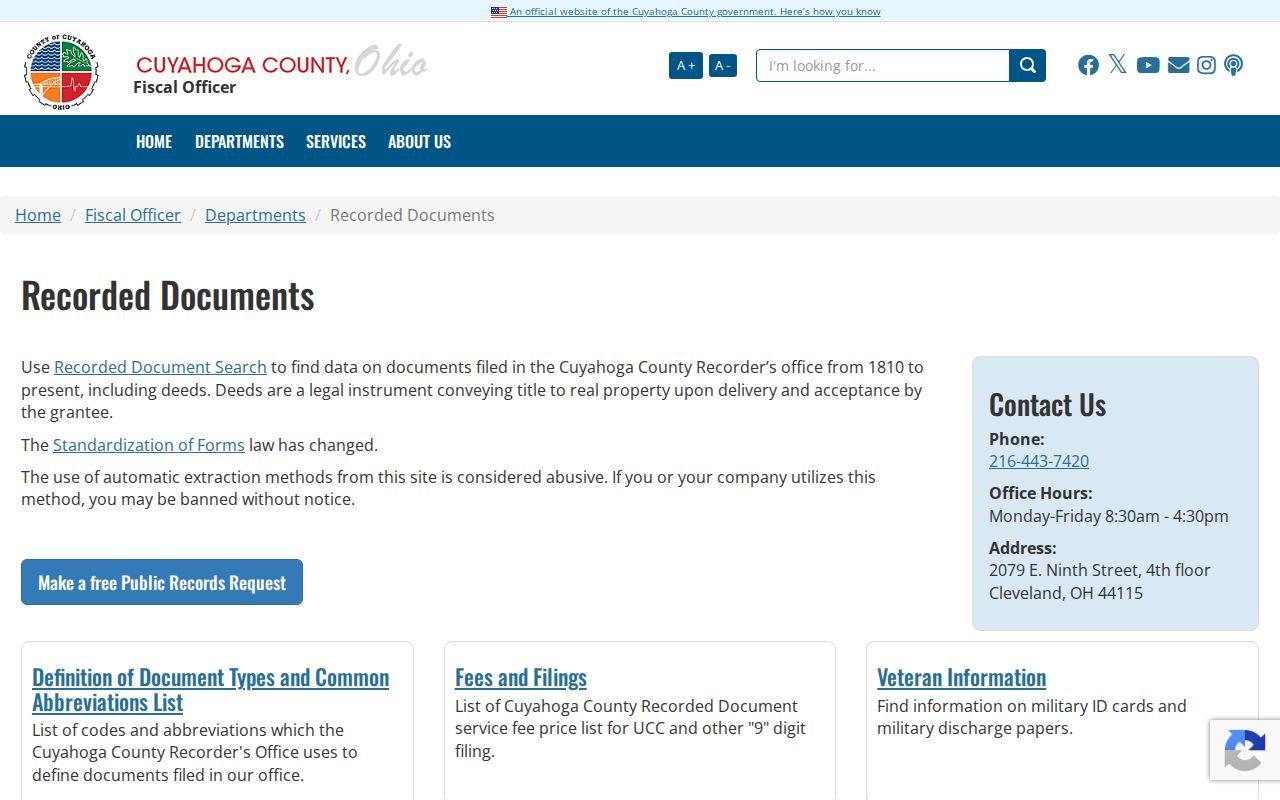
Record the document number and the legal description with the names. Those fields make it less likely that a repeated surname or an altered address will pull the house history onto a different parcel.
Extend South Euclid History in the Map Room
The Fiscal Office’s Maps & Digital Imaging route explains the PPN and directs property researchers to the Map Room. Staff can research prior ownership for approximately 40 to 50 years. The same source cautions that a transfer on a property record might be a purchase, refiling, name addition, or transfer-on-death event. Treat it as a lead that needs document context.
Maps & Digital Imaging provides the county’s Map Room and property-map entry point.
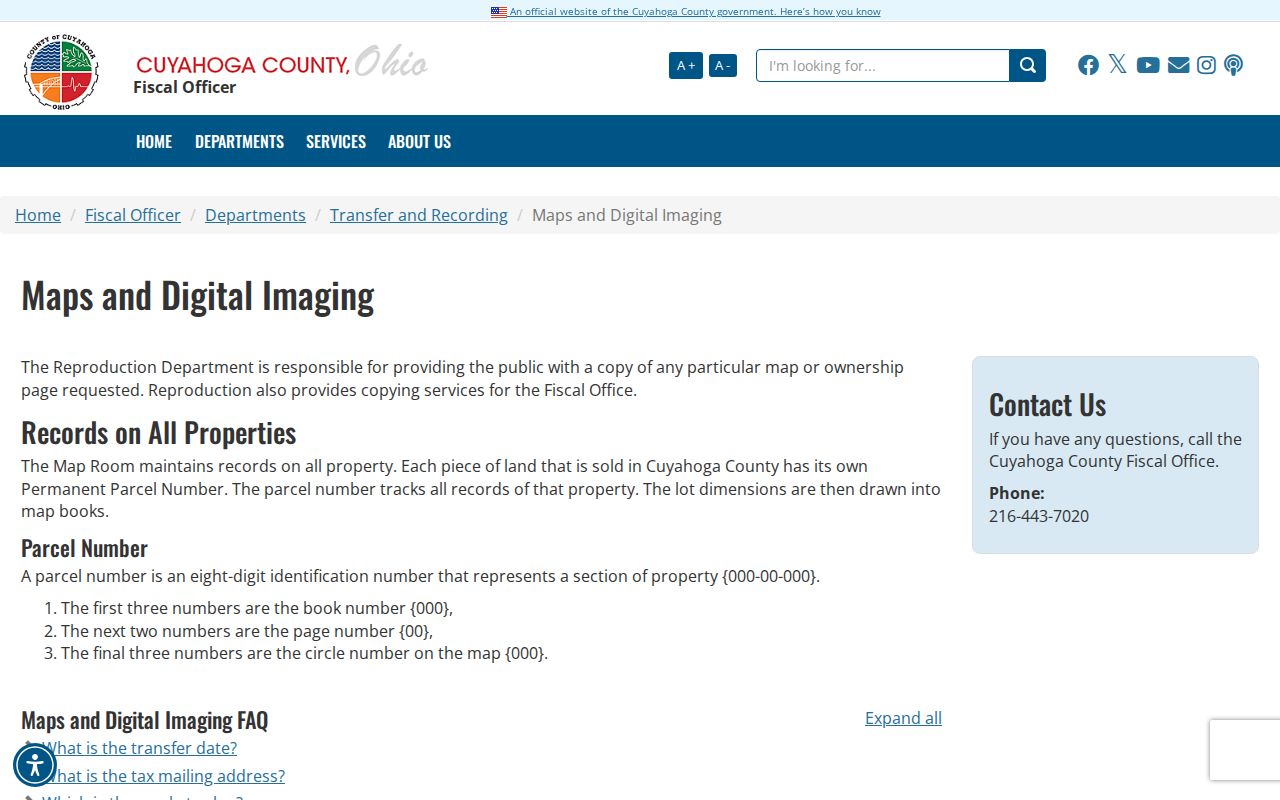
Use the map and parcel reference to bridge a street description to a deed or tax record. Map evidence can place a structure or lot in context, but it does not identify a household by itself.
Continue South Euclid House Research at Archives
When an online trail ends, Cuyahoga County Archives property research is the documented fallback. The guide asks researchers to begin with the street address and/or parcel number because street names and property descriptions can change. It identifies original map volumes from 1860 to 1945, tax records from 1819 to 1986, suburban atlases from 1852, 1874, 1892, and 1903, tax maps from 1860, 1870, 1880, and 1890, plus appraisal cards from about 1935 to 1970.
The Archives property-research page sets out the source dates and appointment-based path.
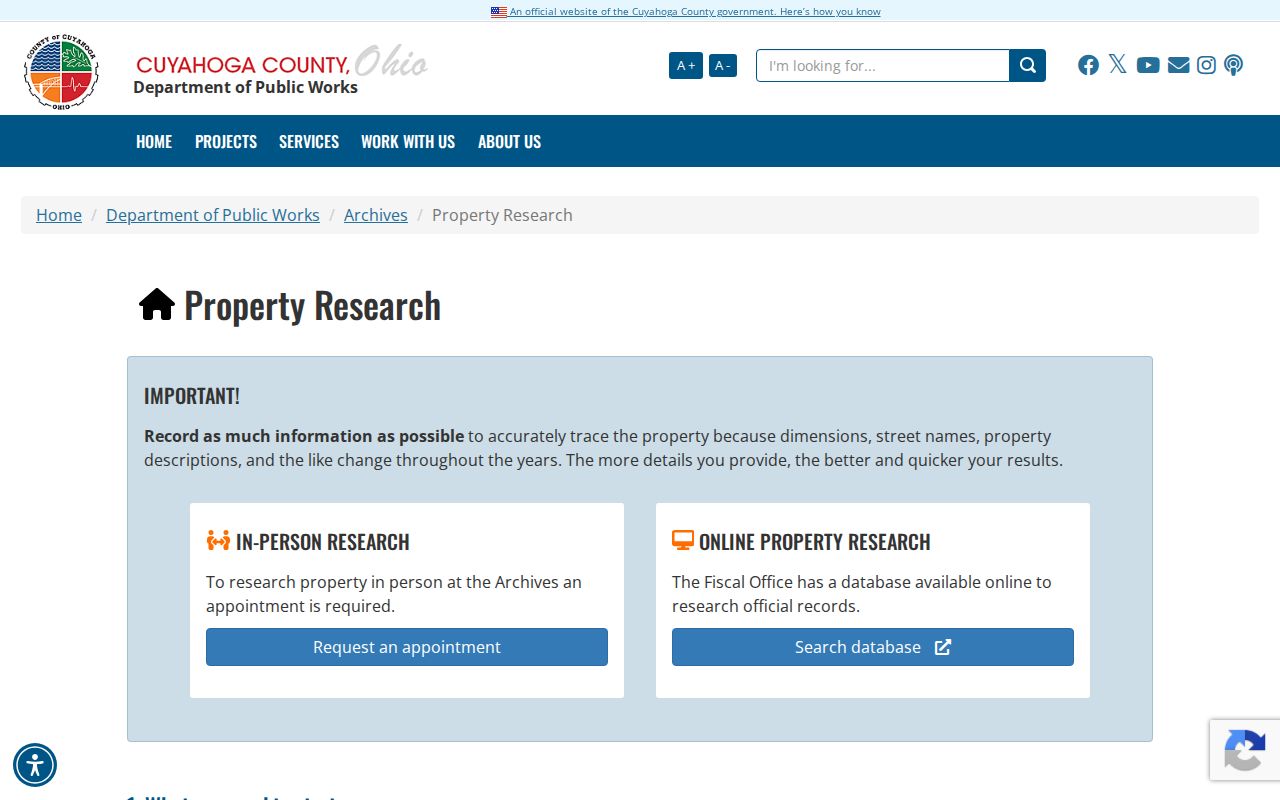
Property research in person is appointment-only. Microfilm is self-service, up to ten volumes or documents can be requested at a time, and the first 40 photocopies are free before the stated per-page charge. A complete email or mail request is estimated at three weeks, so include the record type, surname or date, and volume/page or petition number when known.
Read South Euclid Maps Sheet by Sheet
Historic maps can help date the built setting around an address. The Library of Congress catalog has a 1926 volume 13, extended to 1933, that explicitly includes South Euclid Village, and a 1926 to June 1950 volume 13a naming South Euclid and adjoining communities. A building outline on a historic map can indicate that a structure stood there by the map’s year. Compare owners in tax duplicates and major valuation changes for construction or change clues.
Use an optional Sanborn check only after locating the index and exact sheet for the address. The volumes are coverage evidence, not a blanket citywide address lookup. They can refine the physical history of a house, but they do not prove who lived there.
Search Euclid Township Before 1917
South Euclid’s municipal history is younger than much of its underlying land history. The city developed within Euclid Township, became a village in 1917, and became a city in 1941. Before 1917, a map, directory, or archival item may be cataloged under Euclid Township, a county or suburb title, or a Cleveland-area series rather than under the current city name. That is a catalog distinction, not proof that an old address was renumbered.
A documented 1906 and 1907 Cleveland old/new-name bridge can help with numeric address listings across the county. Preserve the historic spelling, legal description, lot or block, map reference, and PPN. No verified South Euclid-specific citywide renumbering date was found.
Place South Euclid Past Households
Deeds identify recorded parties. To pursue who lived here before, pair those milestones with the historical address sources. The Cleveland Public Library directory guide identifies a dedicated South Euclid title for 1949 through 1963, an East Suburban successor for 1964 through 1980, and criss-cross materials that can connect an address to adult listing(s) for their edition. The collection details belong with the South Euclid Directory Book; the backward trail uses the relevant volume without recreating its whole shelf.
- Place the address between recorded ownership or tax milestones using the PPN and legal description.
- Check the closest South Euclid or East Suburban directory year, then the matching criss-cross volume when available.
- Pair the older directory interval with the released 1950 federal census as a household snapshot, not a current confirmation.
- Compare an adult listing with deeds, maps, and a probate or obituary endpoint before joining it to the house story.
Directory entries can include name, address, occupation, and sometimes telephone information. From 1929, address sections can identify adult occupants, while earlier editions have different inclusion patterns. A listing never establishes every member of the household or continuous residence.
Close South Euclid Address Trails Carefully
An estate, certificate of transfer, obituary, or court record may explain why a recorded chain changes. Cuyahoga Probate’s docket and copy channels are separate from the Recorder. For a municipal or broader court case, South Euclid Municipal Court CaseLook and the Cuyahoga Common Pleas Case Records Search are locators, not complete official case files. Online displays can be delayed or selective, so use the court’s clerk, counter, or written request process for verification.
County records requests are governed by the Ohio Public Records Act / Sunshine Laws. An existing identifiable record may be requested without magic wording, but offices can redact protected material and are not required to create a new research report. For historical family timelines, the Archives’ elector lists from 1893 to 1982 and naturalized-voter index from about 1865 to 1975 can add context without replacing the property record.
Limit South Euclid Previous-Resident Searches
Past-resident research should not turn a parcel, directory, or court reference into a present-day personal profile. A property owner is not necessarily an occupant. A directory’s adult listing is limited to its edition. Protected court material, confidential addresses, utility customers, DMV data, and other private records are not a house-history product. Preserve the uncertainty where a source is silent.