
Finding South Euclid Residents
There is no single current list of every South Euclid household. The most useful starting record depends on the question. An address question belongs first with the county parcel system and Recorder. A question about a specific registered voter belongs with the Ohio voter search. A past household calls for the library’s directory microfilm and the County Archives. A court case or vital event has its own custodian. Keeping the question narrow saves time and avoids treating a weak clue as a conclusion.
Use an address, name, and approximate period as a set. Property ownership, a tax mailing address, a voter record, and an old directory entry describe different things. None independently names every person in a home. When two official sources agree on the same parcel, date, or case number, the trail is stronger. When they conflict, pause and ask the responsible office for the existing record rather than filling in the gap.
- For an address, search Cuyahoga County MyPlace and retain the parcel number, situs, owner field, and transfer lead.
- For a known person, use Ohio’s voter tool with first name, last name, and Cuyahoga County, then compare the result carefully.
- Use the Recorder index for a recorded party, deed, lien, or legal-description trail tied to that parcel.
- For a former household, consult the dedicated South Euclid directories and criss-cross volumes at Cleveland Public Library.
- When the needed existing record is not online, make a focused request to the city, county, court, or archive that holds it.
South Euclid Record Offices
South Euclid’s most useful resident-related records are mostly county records. The Fiscal Officer keeps parcel, map, tax, transfer, and recorded-document paths. The Board of Elections provides voter-information channels. The Clerk and Probate Court maintain separate court systems. The City Law Department and Municipal Court handle municipal records and requests. For address-by-address work, the dedicated South Euclid street directory route keeps the parcel and document sequence in one place.
Fiscal Officer, Transfer & Recording
2079 E. Ninth St., Fourth Floor
Cleveland, OH
216-443-7420
Fiscal Officer, Real Property
County parcel and map services
Cuyahoga County, OH
216-443-7020 Map Room
Cuyahoga Board of Elections
1803 Superior Avenue
Cleveland, OH 44114
216-443-8683
MyPlace in South Euclid
Cuyahoga County MyPlace is the practical first stop for a South Euclid property question. Set City to South Euclid, choose Owner, Parcel, or Address, then enter the known detail. A parcel card can show the permanent parcel number, situs address, listed owner, tax mailing address, transfer information, values, map links, permits, and Tax By Year path. The county calls it a free public compilation, not the legal official record, so an important result still needs a Recorder or Fiscal Office check.
| MyPlace control | South Euclid use |
|---|---|
| City | Select South Euclid to reduce countywide same-name results. |
| Search mode | Choose Owner, Parcel, or Address before searching. |
| Search text | Use the convention for the selected mode. |
| Parcel result | Open transfers, tax history, document list, and map paths as needed. |
The MyPlace search screen shows the county’s property-search starting point.
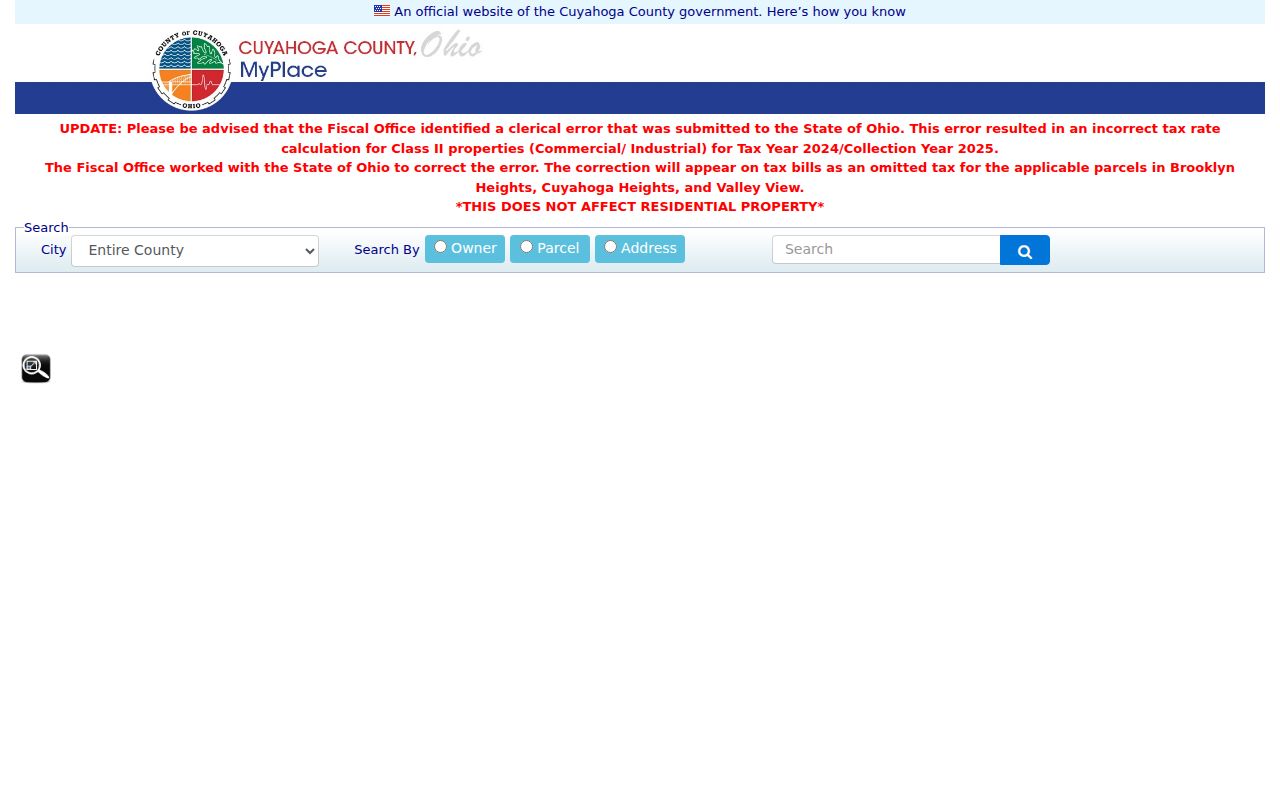
A visible owner or billing field can direct further research, but it does not establish every South Euclid resident at the parcel.
South Euclid Recorder Trails
The Cuyahoga County Recorded Documents department says its collection reaches from 1810 to the present. Its Advanced Search can take party names, grantor, grantee, recorded or instrument date ranges, document types, document numbers, parcel ID, volume and page, property address, OCR text, and legal-description fields. That makes the Recorder a document trail, not a present-resident list. Compare the parcel, legal description, recording date, and parties before deciding that two entries concern the same property.
Official Records Search offers index-only and full-text OCR modes. An index result can identify grantor, grantee, document number, parcel ID, dates, document type, and placement fields. Image availability and copy cost should be checked in the live portal or at the counter. The recorded document itself and the custodian’s current record remain the verification source.
The Recorder’s quick-search interface is shown here.
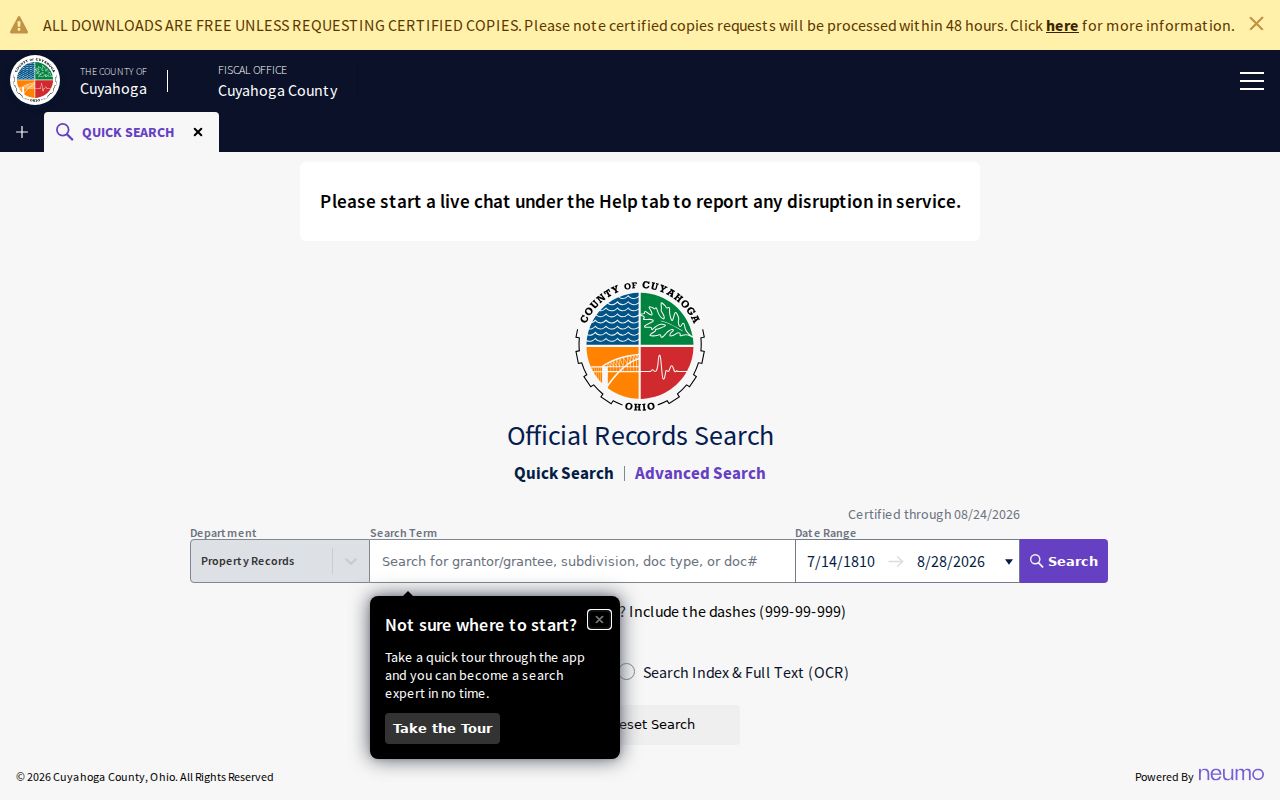
For a past address, a grantor-grantee chain is most reliable when each handoff also matches the parcel or legal description.
South Euclid Voter Details
Ohio Secretary of State My Voter Information requires first name, last name, and county. Choose Cuyahoga County for a South Euclid search. The result path can provide registration, residence, precinct, registration date, voting history, and last activity fields under Ohio law, while voting history means participation, not ballot choices. The state tool also permits a street-name refinement after an initial result.
Ohio law protects full or partial Social Security numbers, driver-license or state-ID numbers, telephone numbers, email, confidential voter records, protected public-service-worker addresses, and other protected material. A voter hit should be treated as person-specific verification, not a street-first census. The County Board’s city data channel and a focused public-record request are the evidence-backed alternatives when an existing record is needed beyond the live lookup.
- Roll
- A list maintained for a defined purpose, such as voter registration, not a full household inventory.
- Index
- A searchable pointer to a record, which can be less complete than the underlying document.
- Parcel
- A defined piece of land identified by the county for property and map work.
- Criss-cross directory
- An address-first directory section used to locate adult listings for a covered year.
South Euclid Court Checks
South Euclid Municipal Court, Cuyahoga Common Pleas, and Probate are separate channels. The Municipal Court’s CaseLook entry is behind terms and says online postings may lag by at least 24 hours, sometimes longer. For confirmation, the court directs people to a written request or an in-person clerk or deputy clerk. Common Pleas offers civil, criminal, foreclosure, and appellate search modes, but its online display is selective and its Clerk is the official keeper of case papers.
A party-name result identifies a case lead. It does not prove a current address or make every filed document available remotely. Probate has its own personal-use terms gate and copy process for estate, guardianship, marriage, and related matters. Match a name result to a case number, court, case type, and filing dates before relying on it.
The South Euclid Municipal Court CaseLook notice makes the verification warning visible.
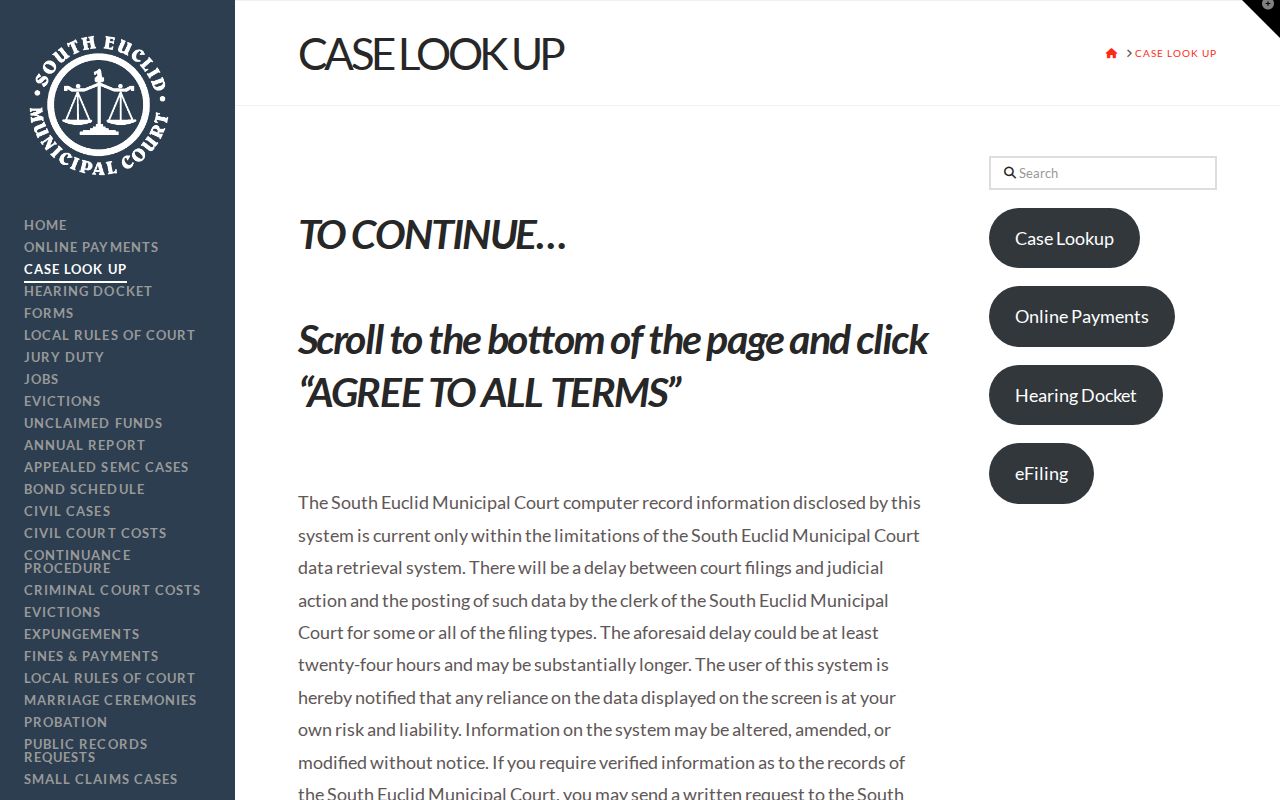
The clerk or court request route is the right next step when a web result must be confirmed or copied.
Current South Euclid Record Lists
Current South Euclid records are purpose-built. MyPlace links parcels to recorded ownership and tax information. The voter tools address registration and precinct questions. Court indexes locate defined cases, and Recorder search identifies parties to recorded documents. Each category answers a narrow question, which is more useful than a broad claim about who lives in the city.
| South Euclid source | What it can confirm | Custodian | Access path |
|---|---|---|---|
| MyPlace parcel card | Recorded owner, situs, tax mailing, transfer and tax paths | Fiscal Officer | Free public portal |
| Voter search | Registration and precinct information for a matching voter | Ohio SOS / Cuyahoga BOE | Required-field public lookup |
| Official Records Search | Recorded parties, documents, dates, parcel and legal clues | Transfer & Recording | Free index and counter |
| Municipal and county dockets | Named party, case number, filing and disposition lead | Relevant court / Clerk | Portal plus clerk procedure |
| Library and archive collections | Historical adult, household, map, obituary, census or local-history clues | CPL, CCPL, County Archives | Microfilm, branch, appointment, or request |
When the goal is to verify one person against several of these channels, use a focused South Euclid resident-lookup workflow rather than relying on a single listing.
South Euclid Vital Paths
Vital events follow a different chain from property or voter records. Ohio Department of Health Vital Statistics is the statewide entry for birth and death certificates, while local registrar channels remain relevant. Cuyahoga Probate Court is the marriage-record keeper, and a divorce or dissolution belongs with the Domestic Relations court file. A certificate or case record may establish an event or relationship, not a current location.
Ohio Revised Code section 3705.23 governs certified vital copies. The law does not support a generic “family only” rule or a blanket historic closure claim. Protected medical, adoption, and other confidential material remains restricted under the controlling statute. Ask the appropriate keeper for the type of copy needed and use its current application or copy process.
South Euclid Archive Fallbacks
The city’s Law Department links its public-record policy, form, council archives, and online request portal. The city portal is a route for a defined existing municipal record, not a dependable resident roll. Ohio’s Public Records Act generally lets a requester seek an identifiable record without using special words, a mandatory form, identity, or stated purpose. An office may still need time to retrieve and redact responsive material, and it does not have to create new research.
The City Law Department record-access page is a useful entry for municipal policy and city archives.
For older county property and people records, the Cuyahoga County Archives provides appointment-based property research, self-service microfilm, and complete email or mail request options. Its holdings include historic tax records, maps, appraisal cards, estate files, naturalizations, and elector material. A complete remote request is estimated at three weeks, and the first 40 photocopies are free before the posted per-page rate applies.
The city-linked South Euclid public-records request portal provides an additional electronic submission path.
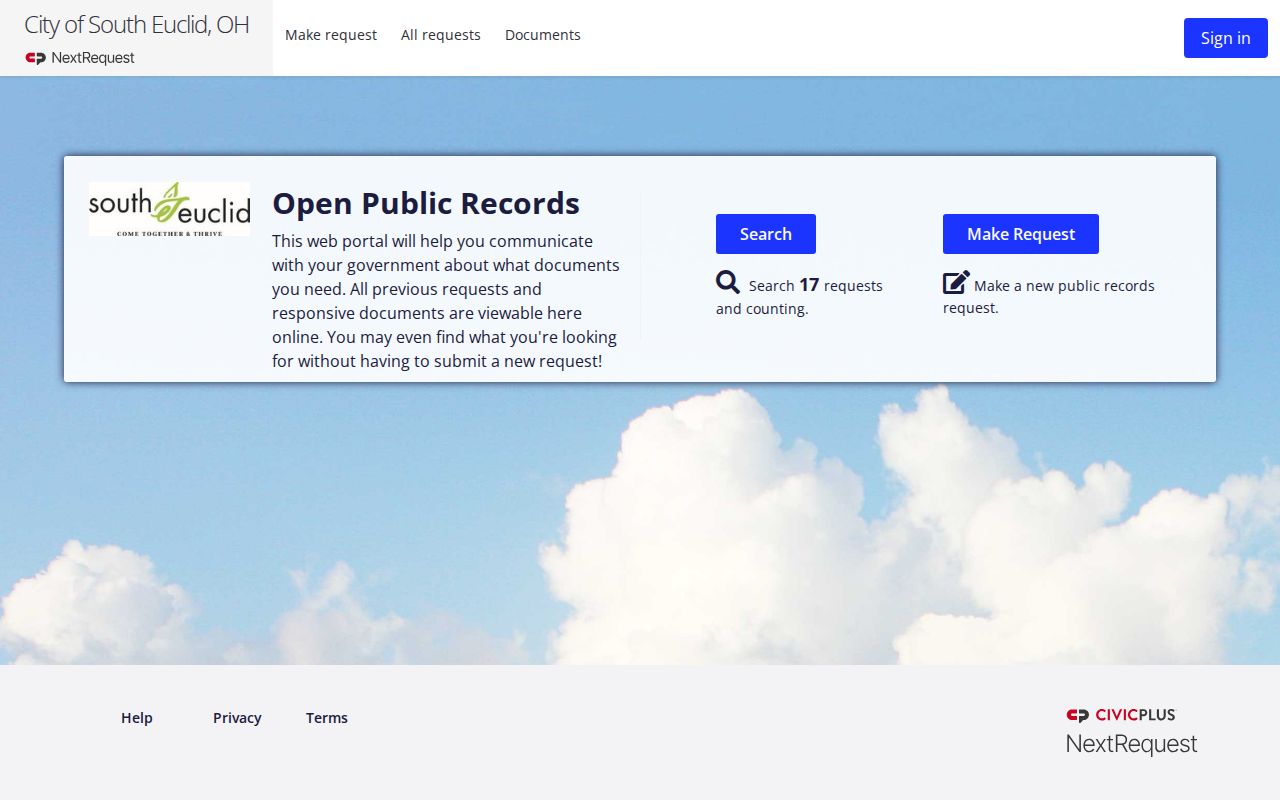
State law allows an office to help clarify a request, but a clear record type and date range give staff the best chance to locate an existing file.
The operative Ohio Public Records Act text is also useful when a request needs to be narrowed or a denial needs a legal explanation.
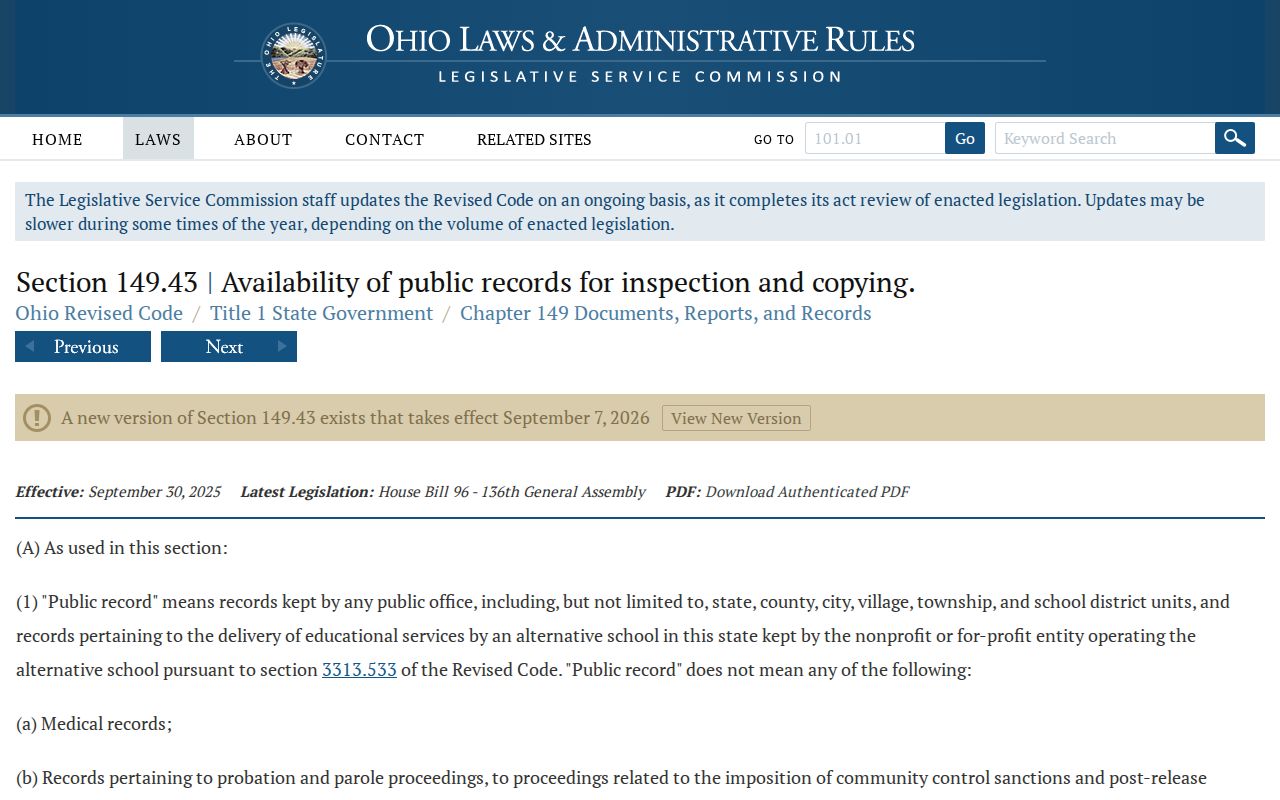
The statute supports inspection and copies of existing public records, while exemptions and redactions remain part of the process.
South Euclid Postal Geography
South Euclid’s confirmed postal starting point is 44121. The USPS facility information identifies the South Euclid Post Office, and City Hall and the South Euclid-Lyndhurst Library use that ZIP. A ZIP label is a postal routing unit, not a substitute for municipal limits, ward, precinct, parcel number, or legal description. Verify an individual address with USPS before assigning any secondary ZIP coverage.
The city has four wards, while planning and County GIS tools add parcel, zoning, school, refuse, and representative context. Those layers can help explain an address, but the city’s resident-information mapping is not an occupant lookup. MyPlace’s documented filter is City plus owner, parcel, or address, not a ZIP-wide resident search.
South Euclid History Shelves
Historic adult listings are a library and archive problem, not a current database problem. Cleveland Public Library holds the dedicated South Euclid suburb directory sequence for 1949 through 1963, followed by the East Suburban Directory through 1980. The runs are on microfilm. Cleveland directories also have an address section from 1929, and the Haines criss-cross run supplies an address-to-adult-name and phone layer for the covered volumes.
Before the city’s 1917 formation, a search may be cataloged under Euclid Township or a regional title rather than South Euclid. The full South Euclid city directory collection details the volume sequence, entry reading, microfilm access, and the need to pair a directory year with deeds, maps, census, or obituary evidence.
The Cuyahoga County Public Library genealogy resources page shows the branch-access research layer.
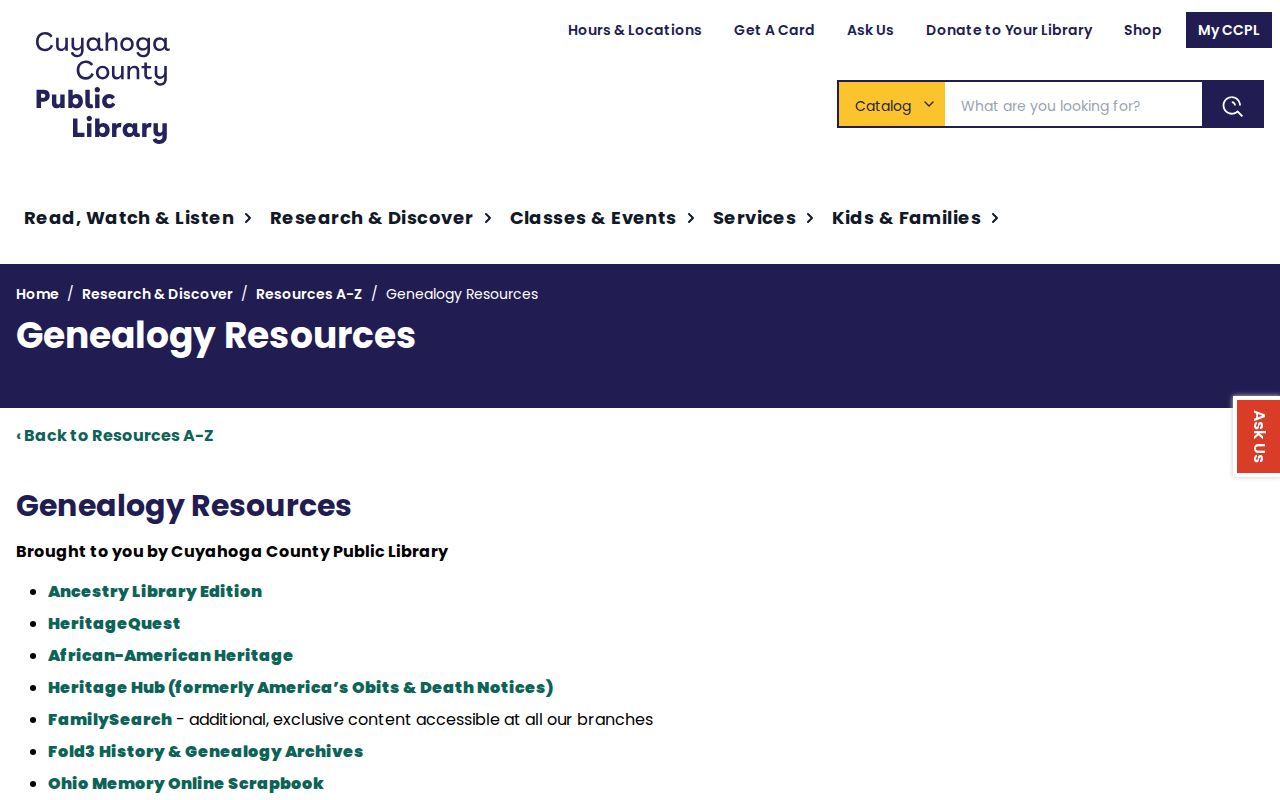
The South Euclid-Lyndhurst Branch can direct users to licensed genealogy resources, while CPL’s specialized collection supplies the historic directory microfilm.
South Euclid Record Scams
Use official domains and published phone numbers when a record search turns into a request for money or account details. Cuyahoga County warned about property-tax scam calls in February 2025. The County said staff might call delinquent owners about options, but would not request financial or personal information by phone. It also warned in 2024 about impostor tax-estimator and property-data pages that could impose downloads, recurring charges, or other risks. The County’s free official estimator begins on its county domain.
A document result, tax notice, or business solicitation should be checked against the agency that issued it. The Ohio Secretary of State says authentic Business Services email uses an @ohiosos.gov address with an identified staff member, and it does not text Business Services customers. Cuyahoga’s Scam Squad and the relevant Fiscal Officer number are better verification routes than an uninvited contact. This caution matters when a resident record is being used to verify a seller, a property notice, or an estate-related document.
South Euclid Privacy Stops
Some information should not appear in a resident search at all. Safe at Home participants, protected public-service workers, confidential voter entries, medical and adoption material, juvenile records, sealed or expunged court material, utilities, delivery records, and DMV personal data have separate protections or access limits. A missing result may reflect those limits rather than a mistake.
Ohio’s Safe at Home program provides an address-confidentiality path for eligible participants, and ORC section 149.45 provides a redaction process for qualifying public-service workers. The right response to a protected record is to respect it. Official material is best used to verify a defined fact, trace family or property history, or resolve a civic record question without targeting an individual.